Why one room stays colder than the other rooms in the house
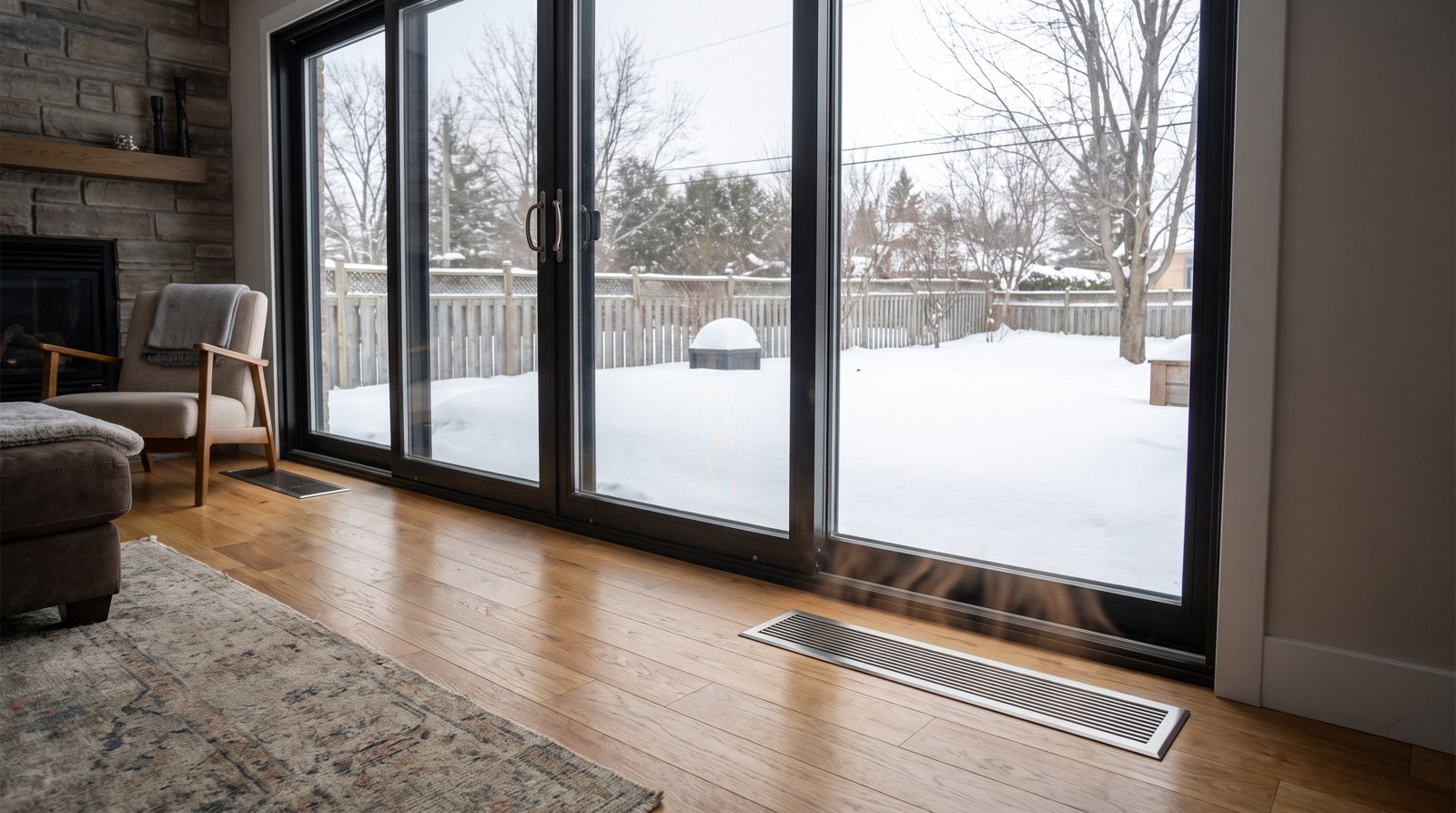
A room that is colder than others is often due to settings, a closed door, an air leak, or a unit being too far away. Check these items in order: settings, air circulation, the building envelope, and then the coverage of your heating systems.
Key points
- Settings come first: Heat mode (never Auto), heat pump at 21°C, and baseboards set 2 to 3°C lower.
- A wall-mounted heat pump primarily heats its own room: distant rooms depend on open doors and baseboard heaters.
- A clogged filter can reduce efficiency by 10 to 30% and cause temperature imbalances between rooms.
- In a poorly sealed home, air leaks can account for 25% of heat loss: the candle test helps locate them.
- A bedroom above a garage or near an exterior wall often requires better thermal insulation.
- If these checks don't change anything, the coverage of your heating, ventilation, and air conditioning (HVAC) systems may need an evaluation.
Check settings first
Start with the thermostat and the units in the room. Incorrect settings often explain temperature discrepancies, and checking them only takes a few minutes.
If you have a heat pump, Hydro-Québec recommends Heat mode (never Auto). The suggested setpoint is 21 °C, with baseboard heaters set 2 to 3 °C lower, for example 18 or 19 °C. If the radiators in the cold room are set too low, they won't compensate, and you'll lack warm air.
Unoccupied rooms
Turning down baseboard heaters in an unoccupied room is common practice. This area will then draw heat from neighboring rooms, especially if the door is left open. Keep a moderate temperature difference between unoccupied zones and the rest of the home to maintain overall comfort and avoid heat distribution issues.
The programmable thermostat
A programmable thermostat can lower the temperature at night or during the day. Make sure the schedule doesn't turn off the heat too early in the bedroom. Also, check each baseboard thermostat, as a dial moved by mistake can easily go unnoticed. Our article on the ideal home temperature in winter offers other guidelines.
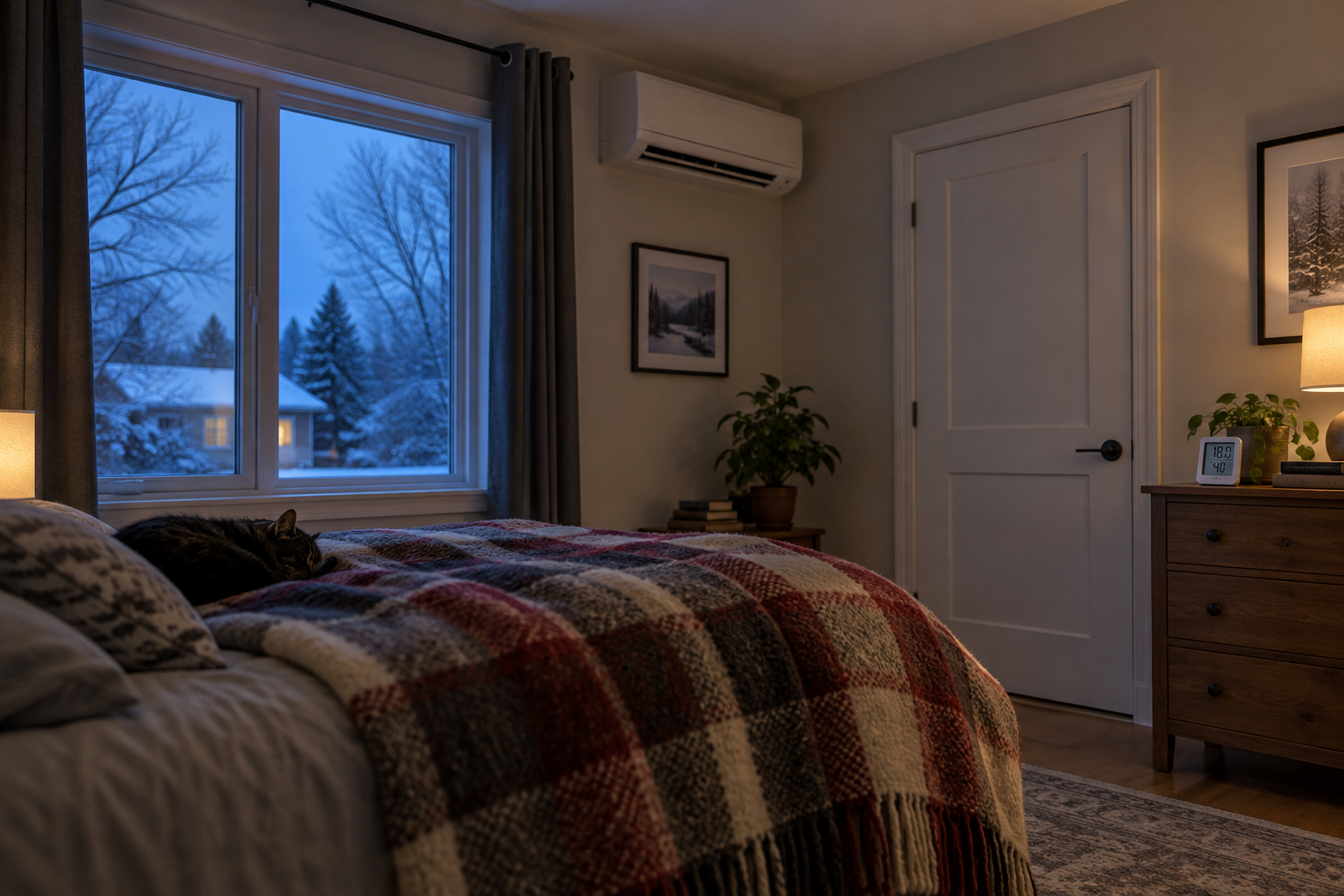
A bedroom far from the wall unit relies primarily on its baseboard heaters and its door.
A wall-mounted heat pump primarily heats the room where it is located
A wall-mounted heat pump distributes heat in the area where it is installed. Neighboring rooms only receive heat if the doors are open and air circulates well.
Let's take a common example. The unit is in the living room, and the bedroom is at the end of the hallway. The bedroom then depends on its baseboard heaters and the door. If the units are properly adjusted and the room remains cold, the problem lies elsewhere. In the living room, the temperature also rises faster than in other rooms, which accentuates the perceived difference.
Do not turn it off between uses. Hydro-Québec recommends leaving it running continuously. Also, keep the outdoor unit clear: remove any snow and ice that could obstruct it. If ice accumulates on the unit, let a technician handle it rather than forcing anything.
Extreme cold is also a factor. Air at -18 °C still contains 85% of the heat found at 21 °C. For many heat pumps, there is a balance point. Below this temperature, the unit only partially meets heating needs, and a backup heating system takes over, according to Natural Resources Canada. A remote bedroom may therefore feel colder during extreme cold snaps. To understand the differences between models, check out our page on wall-mounted and central heat pumps.
Air circulation
A room stays cold when warm air cannot reach it. A closed door, a blocked vent, or a dirty filter are enough to create a temperature difference.
Doors, vents, and furniture
Make sure nothing is covering your heat vents or air return grilles. A sofa, long curtains, or a thick rug can block airflow. In a central forced-air system, an obstructed vent sends less warm air to that specific area.
Filters, ducts, and maintenance
AA dirty filter can reduce the efficiency of a heating system by 10 to 30%. Clean or replace it according to the manufacturer's instructions. Duct maintenance also matters: a loose connection or accumulated dust reduces the heat delivered to the end of the line. If you suspect a faulty duct, have it inspected. Regular equipment maintenance improves energy efficiency and reduces comfort issues. For air conditioning, the same maintenance limits temperature fluctuations in the summer and lowers energy consumption.
Multi-story homes: heat rises
In a multi-story home, heat naturally rises. Upper floors are often warmer, while the basement stays cooler because it is surrounded by cold ground. A wall-mounted heat pump on the main floor does little to heat the basement. A well-balanced central system reduces this temperature gap between floors and improves comfort in all areas of the house.
The bathroom
Bathrooms cool down quickly: they are small, often located against an exterior wall, and have little heating. The humidity felt after a shower can also make the room feel chilly. Using a bathroom fan properly limits this sensation and controls humidity to maintain comfort.
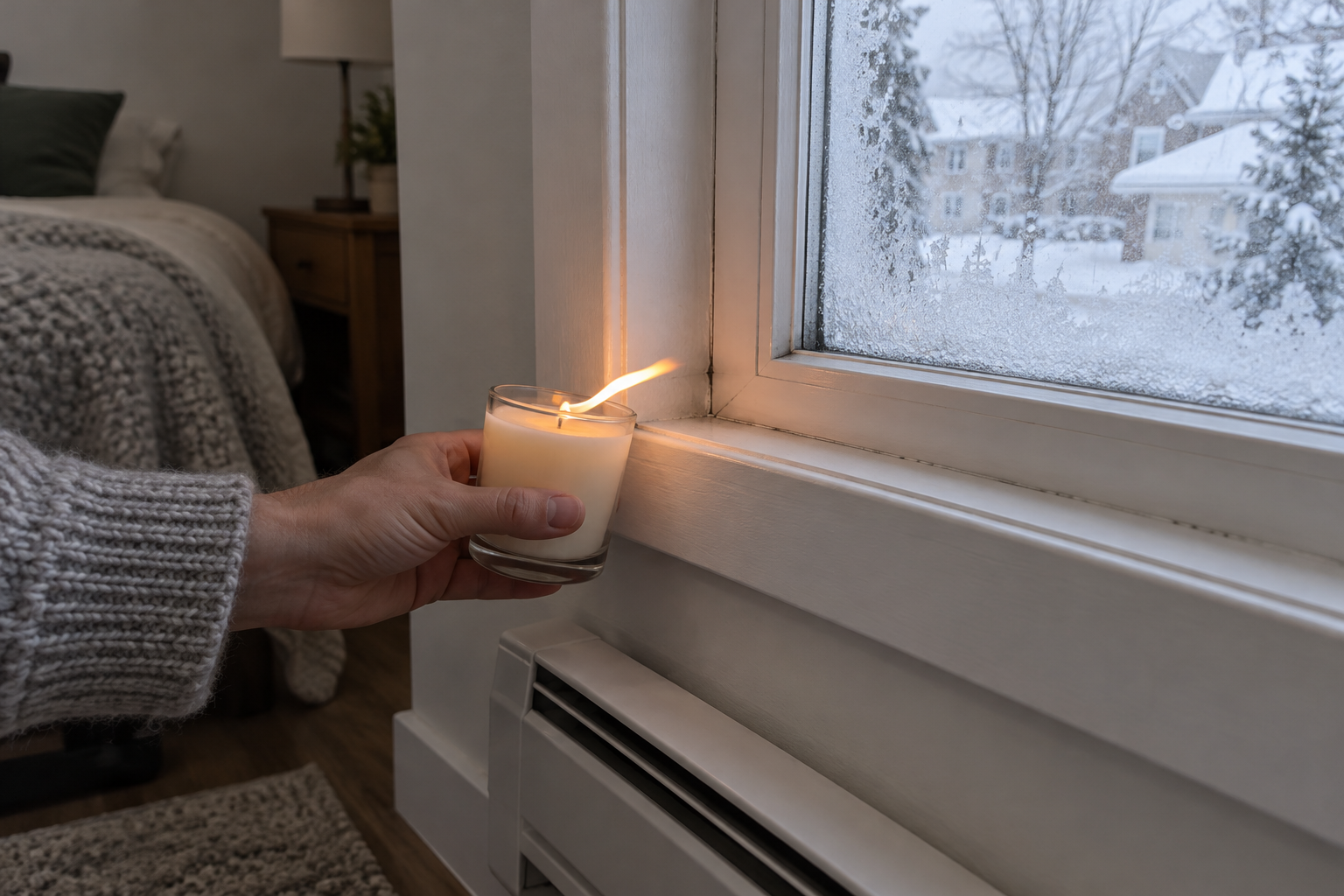
The candle test: a flickering flame indicates an air leak.
Air leaks: the candle test
The candle or paper test can identify air leaks without any special equipment. In a poorly sealed house, air leaks can account for 25% of heat loss, according to the Government of Quebec.
Here is how to proceed:
- Close all windows and exterior doors.
- Turn on all exhaust fans (range hood, dryer, central vacuum, bathroom fan), which exacerbates leaks.
- Slowly move a candle or a sheet of paper along the walls, near electrical outlets, window frames, and baseboards.
- Note the spots where the flame flickers or the paper trembles.
Paper is safer than a flame. Keep the candle away from curtains. In the basement, check the joint between the concrete and the framing: a poor seal is often the cause of air infiltration.
To fix this, first caulk the top of the house and damp rooms like bathrooms. Air exfiltration occurs primarily upward. If leaks remain difficult to find, a blower door test can help locate them and measure the air entering the house.
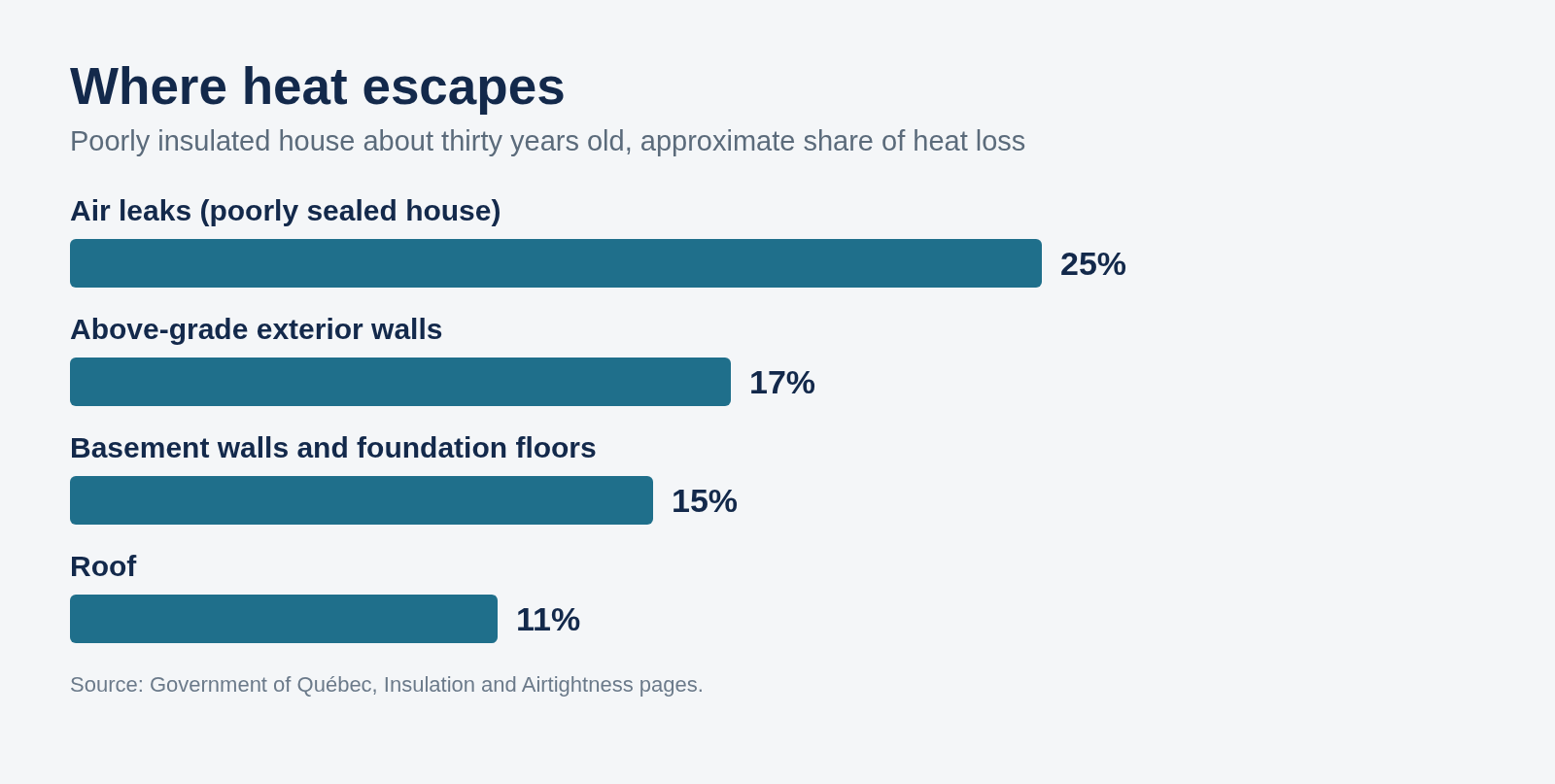
Where heat escapes in a poorly insulated house that is about thirty years old.
Insulation: walls, basement, room above the garage
Insufficient insulation cools the surfaces of a room. You then feel a cold wall effect, even if the thermostat shows the correct temperature.
This effect is noticeable near exterior walls and windows. The body loses heat to these cold surfaces, and the area feels cooler. Poor insulation can lead to cold floors or walls, condensation at the bottom of the basement, and signs of mold, notes the Government of Quebec.
In a poorly insulated house that is about thirty years old, heat loss can be in the range of:
A bedroom above a garage requires special attention. It is recommended to insulate floors above unheated spaces, such as a garage or a crawl space. If this room has a cold floor, that is likely the cause.
In the attic, we recommend an R-value of 50 or higher in Quebec. Even good insulation loses its effectiveness if it is poorly installed: it must fill the cavity without leaving any gaps.
In the basement, installing insulation from the inside requires caution. This approach increases the risk of freezing, and only waterproof, well-drained concrete foundations should receive this treatment. Leave this decision to an insulation specialist. Proper insulation must also be accompanied by adequate ventilation to prevent condensation and moisture.
When systems are poorly sized or poorly distributed
If the settings, airflow, and building envelope are correct, the HVAC systems themselves may still fail to adequately cover certain rooms. Hot water radiator heating, powered by a boiler, behaves like baseboard heating. Each radiator must be powerful enough for its room. This is the final avenue to explore.
Here are some common situations:
- a room added or expanded after the heating was installed;
- a room located very far from the main unit;
- baseboards that are too small for the room's square footage;
- poorly balanced ducts in a central system.
A heat pump remains a great choice for lowering your bill: it can reduce heating-related electricity consumption by 25 to 40%, compared to baseboards alone. It also uses up to three times less electricity than baseboards for the same amount of heat. However, a single wall-mounted unit cannot cover every room. A remote bedroom may require an additional unit or a central system.
To compare your options, our article on choosing between a heat pump and an electric furnace will help you. You will also find an overview of our heating installation services in Quebec.
When to have your home evaluated
Have your home evaluated if the temperature difference persists after the previous checks. An HVAC technician will then examine the distribution of warm air, the ducts, and the unit's capacity.
Other signs warrant a call: recurring condensation, traces of mold, or a unit blowing lukewarm air. Our article on warning signs of a faulty heating system covers these cases in detail.
If you live on the North Shore, check out our pages on heating in Laval, the heating in Terrebonne and the heating in Blainville. These present the services offered in your area.
Frequently asked questions about rooms that are colder than others
.webp)
Guarantee: No traces, no stress — only lasting results.
5,000+
96%
$6,275
.avif)
.webp)