Heat pump constantly starting and stopping: causes and solutions

A heat pump that shuts down when the set point is reached, during a defrost cycle, or while modulating its speed is operating normally. Frequent, rapid starts and stops indicate short-cycling, which is often related to sizing, settings, airflow, or a malfunction.
Last checked: November 9, 2026
Key points
- Stopping at the set point is normal : the unit shuts off when the house reaches the requested temperature.
- Defrosting can trigger at 30, 60, or 90-minute intervals according to Natural Resources Canada (NRCan), with the outdoor fan stopped.
- An oversized heat pump produces too much heat in mild weather, then cycles on and off.
- Automatic mode and frequently changed set points cause unnecessary starts.
- A dirty filter or an obstructed outdoor unit reduces airflow and efficiency.
- A refrigerant leak or an electronic failure requires a technician's intervention.
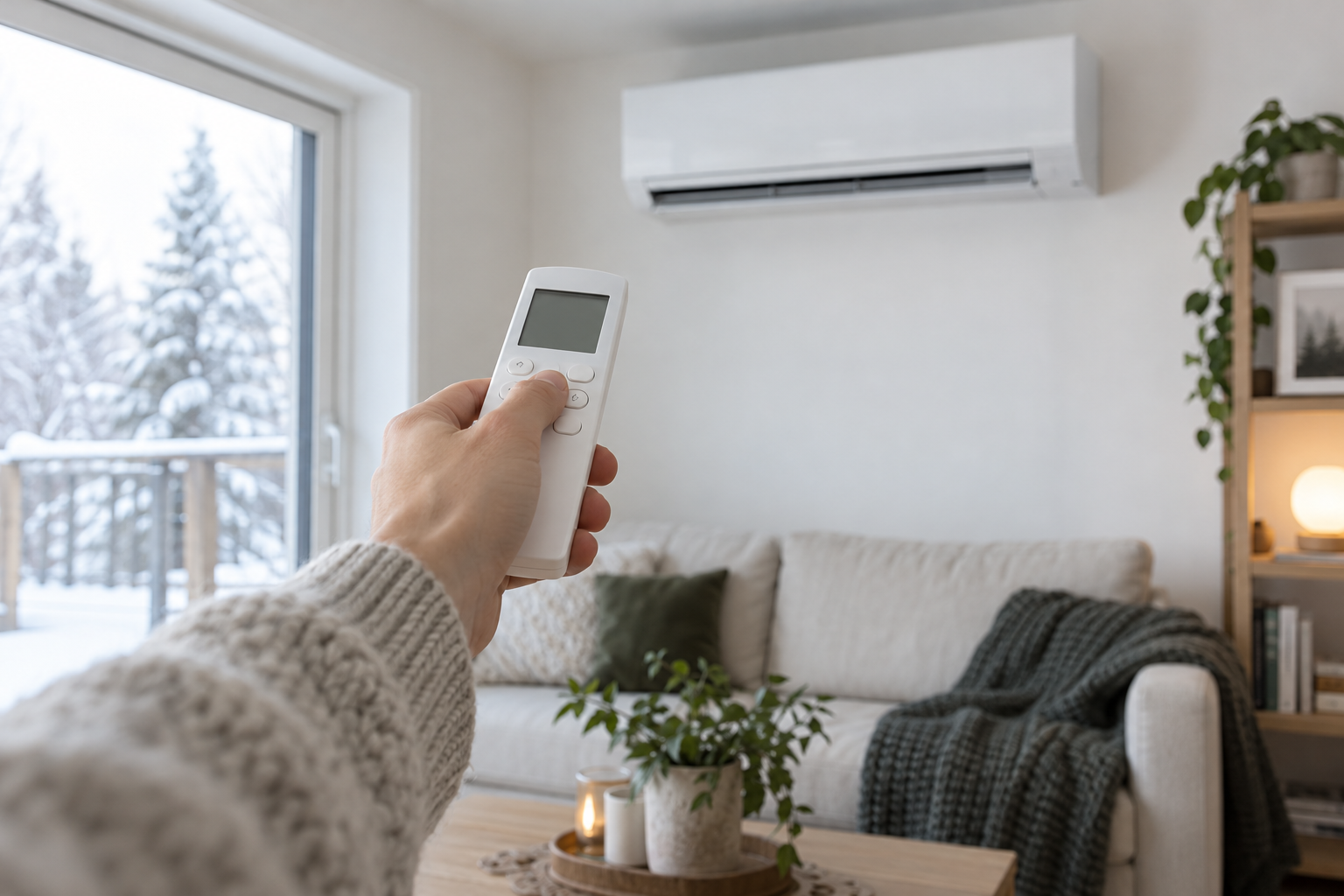
Heating mode and a stable set point limit unnecessary starts.
Normal heat pump shutdowns
Three behaviors generally do not indicate a fault: shutting down when the set point is reached, defrosting, and speed modulation.
Reaching the set point
When the ambient temperature reaches the thermostat set point, the heat pump shuts off. It restarts when the ambient temperature deviates from the set point again. This rhythm is the standard operation for a heat pump in both heating and cooling modes.
The defrost cycle
In winter, frost forms on the outdoor coil. During the defrost cycle, the reversing valve switches the unit to cooling mode to send hot gas to the outdoor unit. The outdoor fan stops. The unit then releases cooler air indoors, and the auxiliary heating warms this air as usual (Natural Resources Canada).
Steam near the outdoor unit and a stationary fan are normal signs of defrosting. The cycle may trigger at 30, 60, or 90-minute intervals depending on conditions and the system design. Let the unit complete its cycle without manually removing the frost.
Variable speed
Variable-speed units adjust their capacity based on demand. According to NRCan, they maintain maximum efficiency in mild weather, whereas single-speed units operate at full capacity or shut off. Therefore, a variable-speed unit that slows down or runs quietly is not malfunctioning.
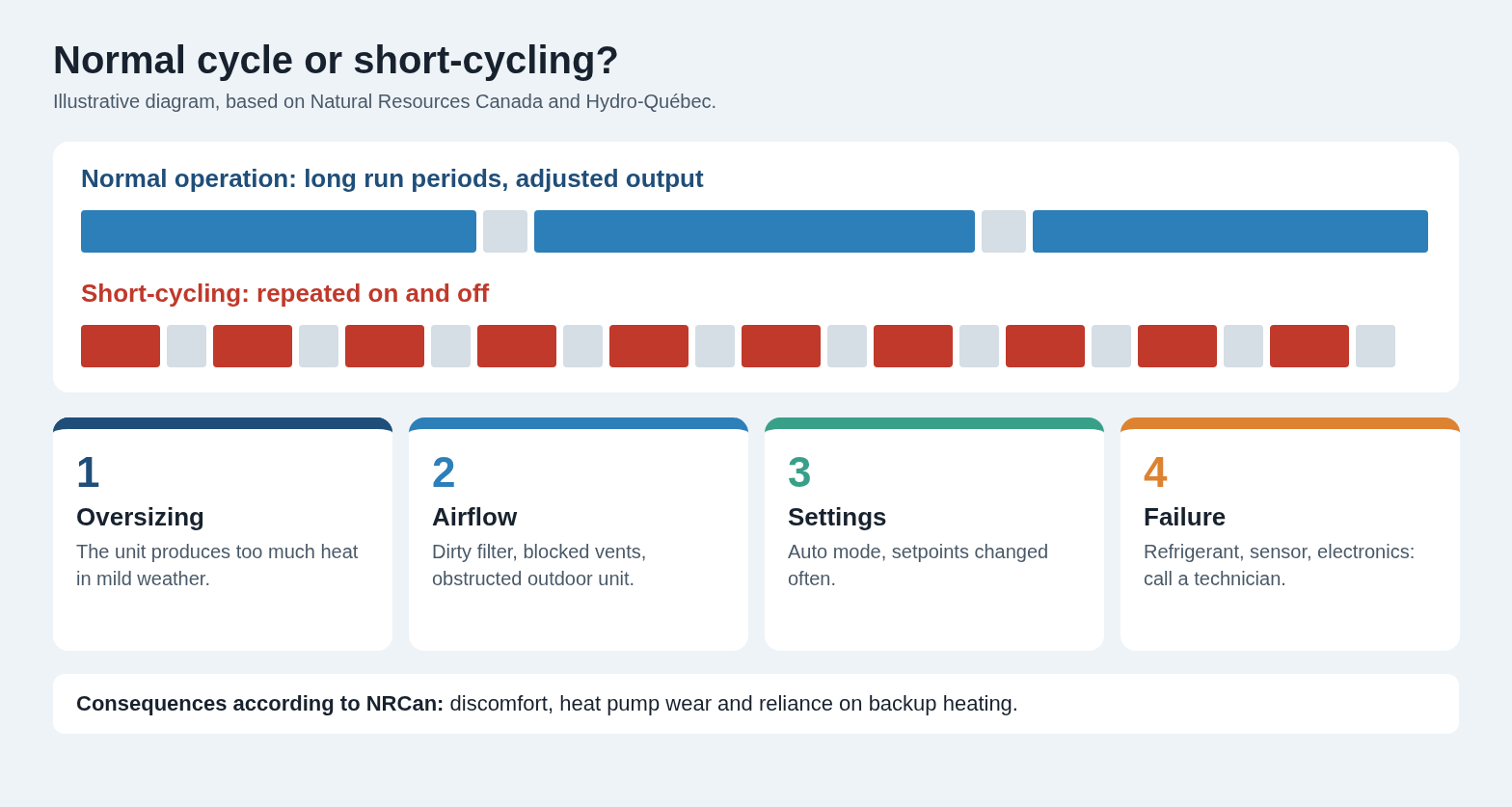
Normal cycle or short-cycling: the diagram.
Short-cycling: how to identify it
Short-cycling is characterized by frequent, rapid start-stop cycles, without a defrost in progress and before the set temperature is reached. The unit starts, stops shortly after, and then restarts, without the house reaching the desired temperature.
The effects are felt throughout the house: temperature fluctuations, rooms that are sometimes hot and sometimes cool, and frequent startup noises. According to NRCan, this start-stop behavior leads to discomfort and wear, and projected energy savings may not be realized. The compressor remains the most vulnerable component of the heat pump, according to the Government of Quebec. If you observe this behavior, review the causes below.
Cause 1: an oversized heat pump
According to NRCan, an oversized heat pump produces too much heat in mild weather and starts up, then shuts down. This leads to discomfort, wear and tear, and a reliance on supplemental heating.
Sizing must take into account the home's square footage, insulation, airtightness, windows, and orientation. NRCan recommends calculating loads using a recognized method, such as the CSA-F280-12 standard. The Government of Quebec recommends consulting a professional accredited by the CMMTQ. Our article on how to choose the ideal heat pump capacity for your home details the process. Addressing air leaks and improving insulation first also allows for the selection of a lower-capacity unit.
Cause 2: Settings that cause it to cycle on and off
Inappropriate settings trigger unnecessary startups. Four points are worth checking.
- Auto mode : Hydro-Québec recommends using heating mode in winter to avoid accidental startups.
- Frequently changed setpoints : maintain a constant temperature, as suggested by the advice from Hydro-Québec. NRCan recommends not lowering the setpoint by more than 2°C.
- Electric baseboards set too high : NRCan recommends setting them 2°C to 3°C below the heat pump setpoint. For example, 22°C for the heat pump and 19°C for the baseboards.
- The fan and louvers : in heating mode, use high or automatic speed, with louvers directed downward.
Cause 3: Insufficient airflow
Insufficient airflow hinders the unit's operation. NRCan notes that it reduces system efficiency and the lifespan of the equipment.
Check the filter first. NRCan recommends cleaning or replacing it at least every 3 months, and Hydro-Québec advises monthly cleaning during periods of heavy use. Wash it with room-temperature water and dry it completely before reinstalling. Then, ensure that vents and registers are not blocked by furniture or rugs.
Also keep the outdoor unit clear of snow, ice, dead leaves, and vegetation. A unit exposed to high winds may benefit from a windbreak. A poorly maintained unit can consume up to 25% more electricity. If the unit becomes noisy in addition to shutting down, consult heat pump is making noise.
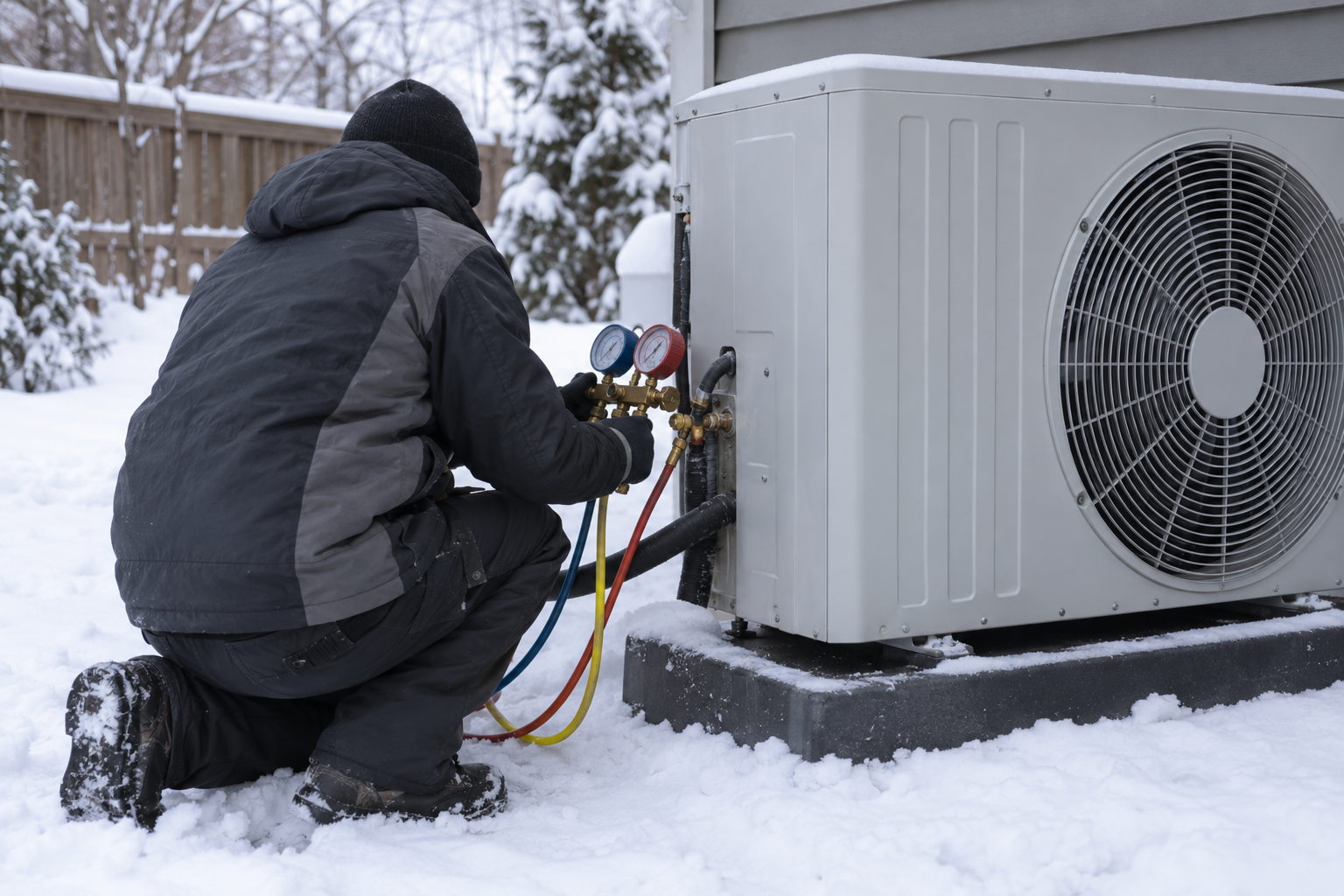
Refrigerant and electrical components: the work of a qualified contractor.
Cause 4: the thermostat, a sensor, or a breakdown
A poorly placed thermostat or sensor will give an inaccurate temperature reading. A thermostat near an air vent, a sunny window, or a heat source may trigger premature shutdowns. Moving or having the sensor checked often resolves the issue.
Breakdowns involving refrigerant, circuit components, or electronics are tasks for a qualified contractor. Checking refrigerant pressure and electrical components must be entrusted to a professional. An error code displayed on the unit or the remote control helps the technician pinpoint the problem.
Table: what you observe and what to do
When to call a technician
Call a technician if the unit continues to cycle on and off after you have checked the filter, settings, and clearances. An error code, unusual noise, or lack of heat also warrant a service call. NRCan recommends annual maintenance by a competent contractor.
We serve areas including Laval, Blainville and Repentigny, as well as the rest of the North Shore, the Laurentians, and Lanaudière. For a replacement or a new unit, check our wall-mounted and central heat pumps, with financial assistance of up to $5,400 available for the units we install. The guide how to choose the right heat pump finish reading this.
Frequently asked questions about heat pump startup and shutdown


Guarantee: No traces, no stress — only lasting results.
5,000+
96%
$6,275