Heat pump blowing cold air or no longer heating: what to check
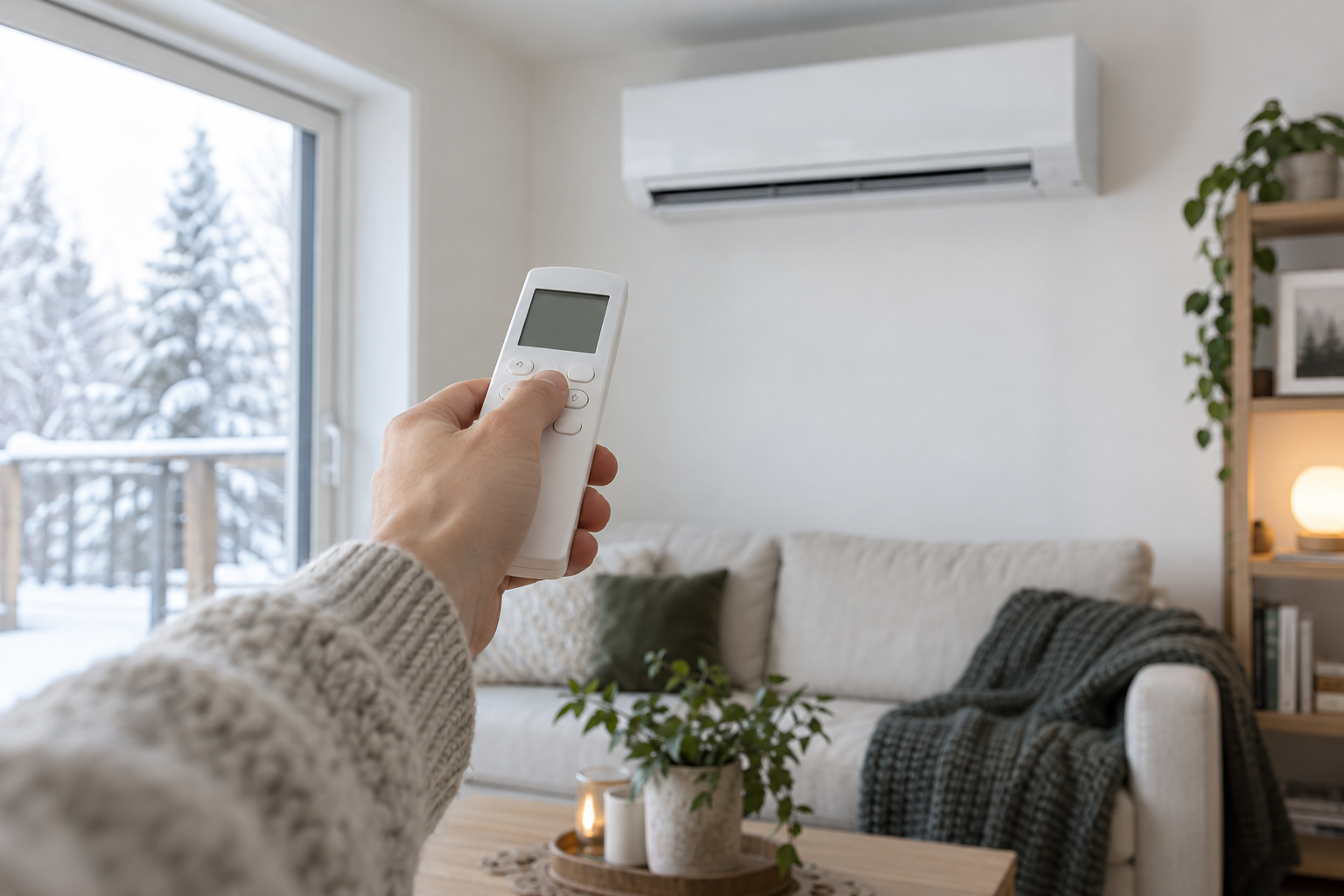
It is often normal for the air to feel lukewarm or cool for a few minutes: the heat pump may be running a defrost cycle or simply blowing air that is less hot than a furnace. If the air remains cold, check the heating mode, the set temperature, the filters, and the outdoor unit, then call a technician.
Last checked: November 9, 2026
Key points
- Air from an air-source heat pump is typically between 25 and 45 °C, compared to 55 to 60 °C for a conventional system.
- Defrosting releases cool air for a short time, at 30, 60, or 90-minute intervals.
- Heating mode must be selected, never automatic mode in winter.
- A clogged filter can reduce efficiency by 10 to 30% according to Hydro-Québec.
- Below the minimum operating temperature (between -15 °C and -25 °C for most models), auxiliary heating takes over.
- Refrigerant, electricity, circuit boards, and the compressor are tasks for a qualified technician.
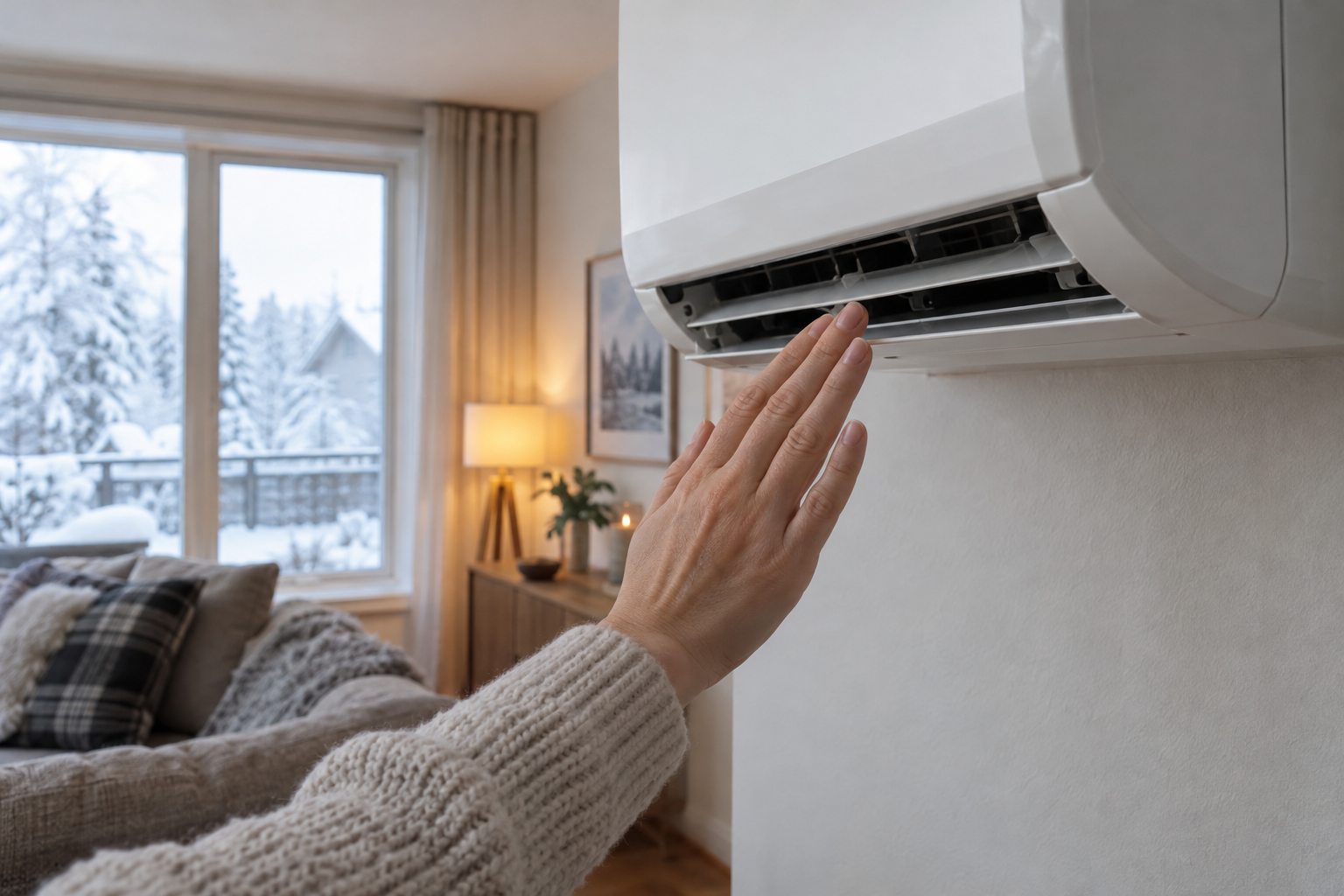
Heat pump air is not as hot as furnace air, but its airflow is greater.
Lukewarm or cold air: what is normal
Three situations account for most cases where a heat pump blows cold or lukewarm air without there being a breakdown.
Heat pump air is not as hot as furnace air
An air-source heat pump blows a larger volume of air at a lower temperature, normally between 25 and 45 °C, whereas conventional systems blow at 55 or 60 °C, according to Natural Resources Canada If you are switching from a furnace to a heat pump, the air may feel lukewarm to the touch. The room will still warm up, however, because the airflow is higher.
The defrost cycle
During the defrost cycle, the reversing valve switches the unit to cooling mode to send hot gas to the outdoor coil. The outdoor fan stops, and the heat pump releases cool air into the ducts. The auxiliary heating system typically warms this air (NRCan). The cycle may trigger at 30, 60, or 90-minute intervals depending on conditions and the system's design.
A wall-mounted heat pump in defrost mode may also stop blowing air for a moment. Let the unit finish its cycle. Do not attempt to defrost the unit yourself. To learn more about ice, see our article on heat pumps and ice on the outdoor unit.
Extreme cold
Most air-source heat pumps have a minimum operating temperature between -15°C and -25°C. Below this threshold, their heating capacity is reduced, and an auxiliary system must heat the home. Ultra-high-efficiency models designed for cold climates can provide excellent performance down to -25°C or even -30°C. Even at -18°C, the outdoor air contains 85% of the heat it holds at 21°C, which allows the heat pump to provide a significant portion of the heating in cold weather. Our article on using a heat pump in winter details these limits.
Check the settings
Start with the remote control or thermostat: these checks are completely safe.
- Mode: select heating mode. In winter, avoid automatic mode, which could trigger air conditioning during mild weather.
- Setpoint: the minimum setpoint temperature in heating mode is 17°C. Set it to a comfortable temperature, for example 22°C.
- Electric baseboards: set them to a temperature 2 to 3°C lower than the heat pump setpoint, for example 19°C, as recommended by NRCan.
- Stability: avoid frequent adjustments. Heat pumps react slowly to large setpoint changes. Lower the temperature by no more than 2°C.
- Continuous operation: do not turn it off in winter, otherwise your electric baseboards will have to work harder.
If the baseboards are set to a higher temperature than the heat pump's setpoint, they will heat up first. The unit will then stop providing heat, which can make it seem like it is no longer working. These settings are also described by Hydro-Québec.
Filters, fan, and airflow
A clogged filter restricts airflow and the heat reaching the room. According to Hydro-Québec, it can reduce the heating system's efficiency by 10 to 30%.
- Filters: manufacturers recommend cleaning them once a month during periods of heavy use. NRCan suggests changing or cleaning them at least every 3 months.
- Cleaning: use only room-temperature water. Let the filters dry completely indoors, away from direct sunlight.
- Fan: set it to a high speed (HIGH) or to automatic mode (AUTO).
- Louvers: in heating mode, point them downward, as warm air naturally rises.
- Vents and registers: do not block them with furniture or rugs.
Our article on heat pump maintenance describes the procedure to follow.
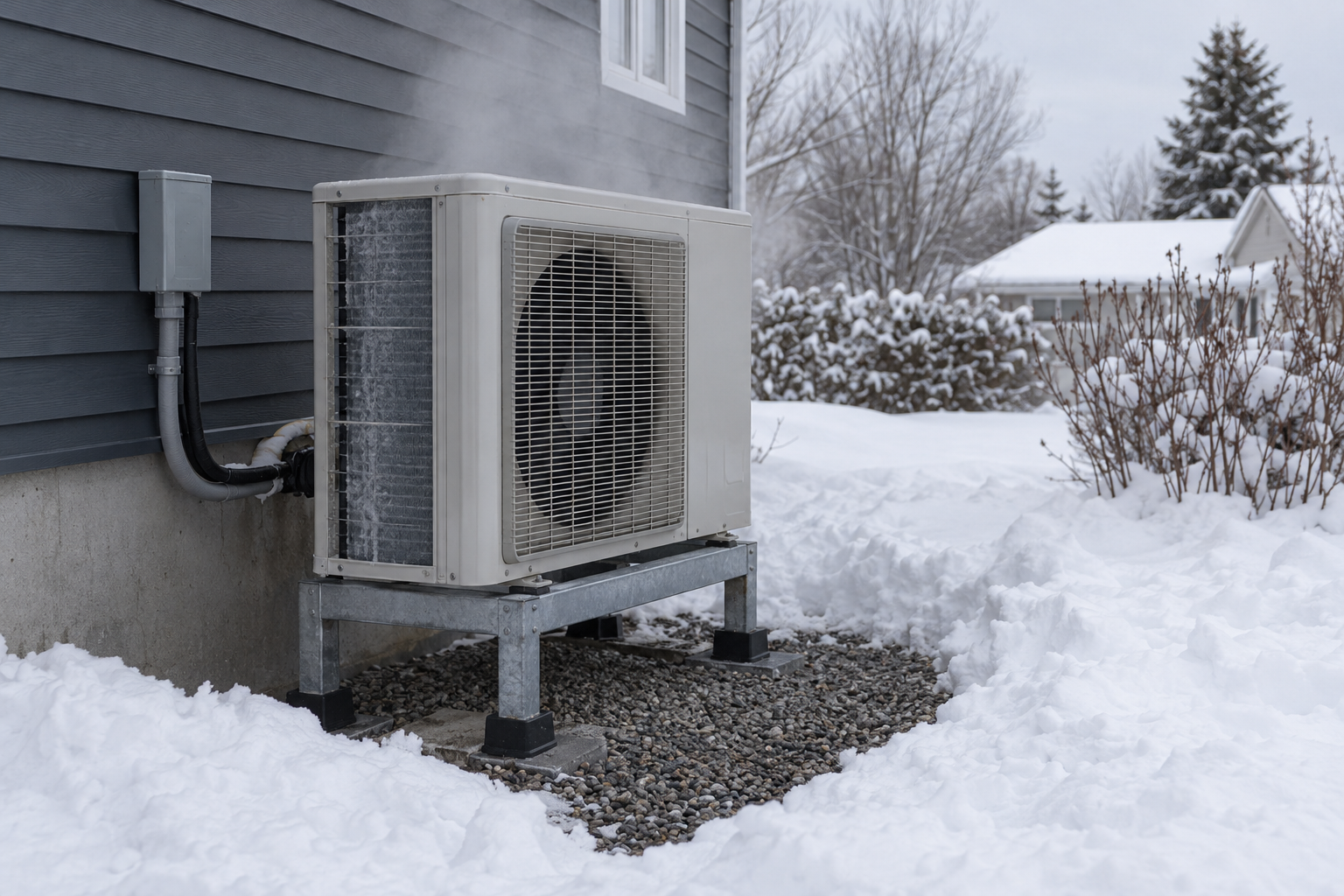
Steam and a stopped fan are normal signs of a defrost cycle.
The outdoor unit
The outdoor unit must remain clear to allow for proper airflow. Remove snow, ice, dead leaves, and vegetation around the unit, as recommended by Hydro-Québec. This unit typically contains the heat exchanger coil, the compressor, and the expansion valve.
Observe the unit from the outside without touching it. If the outdoor fan is stopped, the unit may be in a defrost cycle. Do not scrape the ice, strike the unit, or use hot water.
Table: symptom, probable cause, what to do
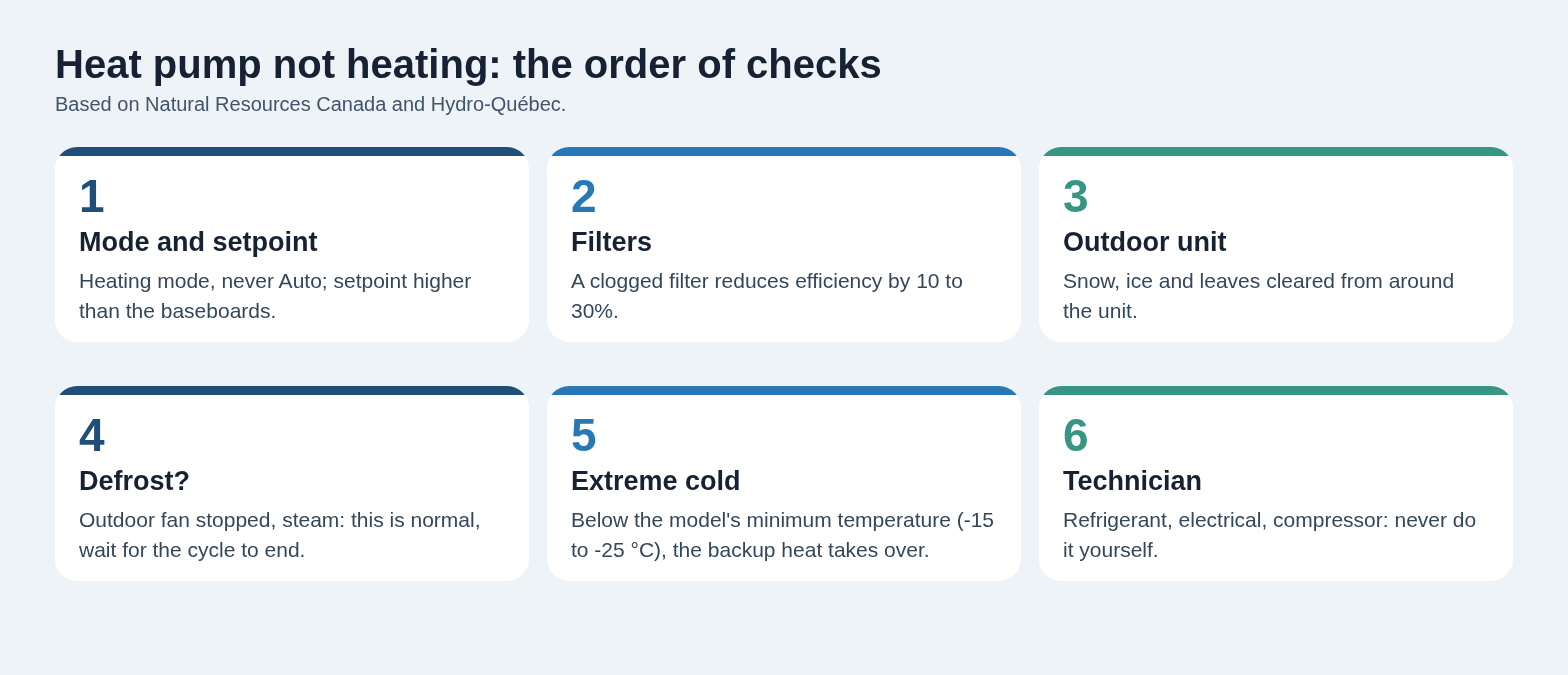
Checks to perform, in order.
When to call a technician
Call a technician if the air remains cold after performing the checks above. Checking refrigerant pressure and electrical components must be done by a qualified contractor. The same applies to the compressor and the electronic control board. Do not attempt to repair them yourself.
NRCan also recommends annual maintenance by a competent contractor. We serve homeowners in Laval, Blainville, and Saint-Jérôme, as well as the surrounding areas. A unit that is improperly sized for winter heating can also explain a lack of heat. The CMMTQ accredits professionals who calculate these requirements. You can consult our page on wall-mounted and central heat pumps. For a replacement, financial assistance of up to $5,400 is available with the units we install.
Frequently asked questions about a heat pump blowing cold air

Guarantee: No traces, no stress — only lasting results.
5,000+
96%
$6,275