High electricity bills despite a heat pump: causes to check

High electricity bills despite a heat pump: causes to check
A high electricity bill despite having a heat pump is most often due to cold weather, settings, maintenance, or heat loss in the home. Check these points in order to identify the cause before calling a professional.
Last checked: November 9, 2026
Key points
- Cold weather always increases consumption : in winter, Quebec consumes nearly twice as much electricity as in summer.
- Heating and air conditioning account for 54% of an average Quebec household's electricity consumption.
- Baseboard heaters set too high take over for the heat pump and drive up the bill.
- A clogged filter can reduce efficiency by 10 to 30%.
- A poorly maintained unit can consume up to 25% more electricity than a unit in good condition.
- An undersized heat pump puts more demand on auxiliary heating.
Winter drives up the bill, heat pump or not
A heat pump reduces heating consumption, but it does not eliminate it. Heating is the primary source of electricity consumption for households, according to Hydro-Québec, which also indicates that heating and air conditioning account for 54% of an average household's consumption.
The greater the difference between the outdoor temperature and the temperature inside your home, the less efficient the heat pump becomes. It uses electrical energy to transfer heat from a cold place to a warmer one. Therefore, in very cold weather, it consumes more.
Compare your bill with the same month last year rather than with one from the fall. To better understand your expenses, check out our article on the costs associated with electric heating in winter in Quebec.
How your consumption is billed under Rate D
TheHydro-Québec's Rate D has two price tiers. The lower price applies to the equivalent of 40 kWh per day, multiplied by the number of days in the billing period. The remaining energy consumed is billed at the higher price.
The utility does not bill based on daily consumption, but on total consumption over the period. In winter, heating causes you to reach the threshold of the first tier more quickly. A longer billing period also provides more days for the first tier.
Winter peak events generally occur from 6 a.m. to 10 a.m. and from 4 p.m. to 8 p.m., from December 1 to March 31, for a maximum of 30 events per winter. Lowering the thermostat by at least 2°C at the start of a peak period helps reduce pressure on the grid.
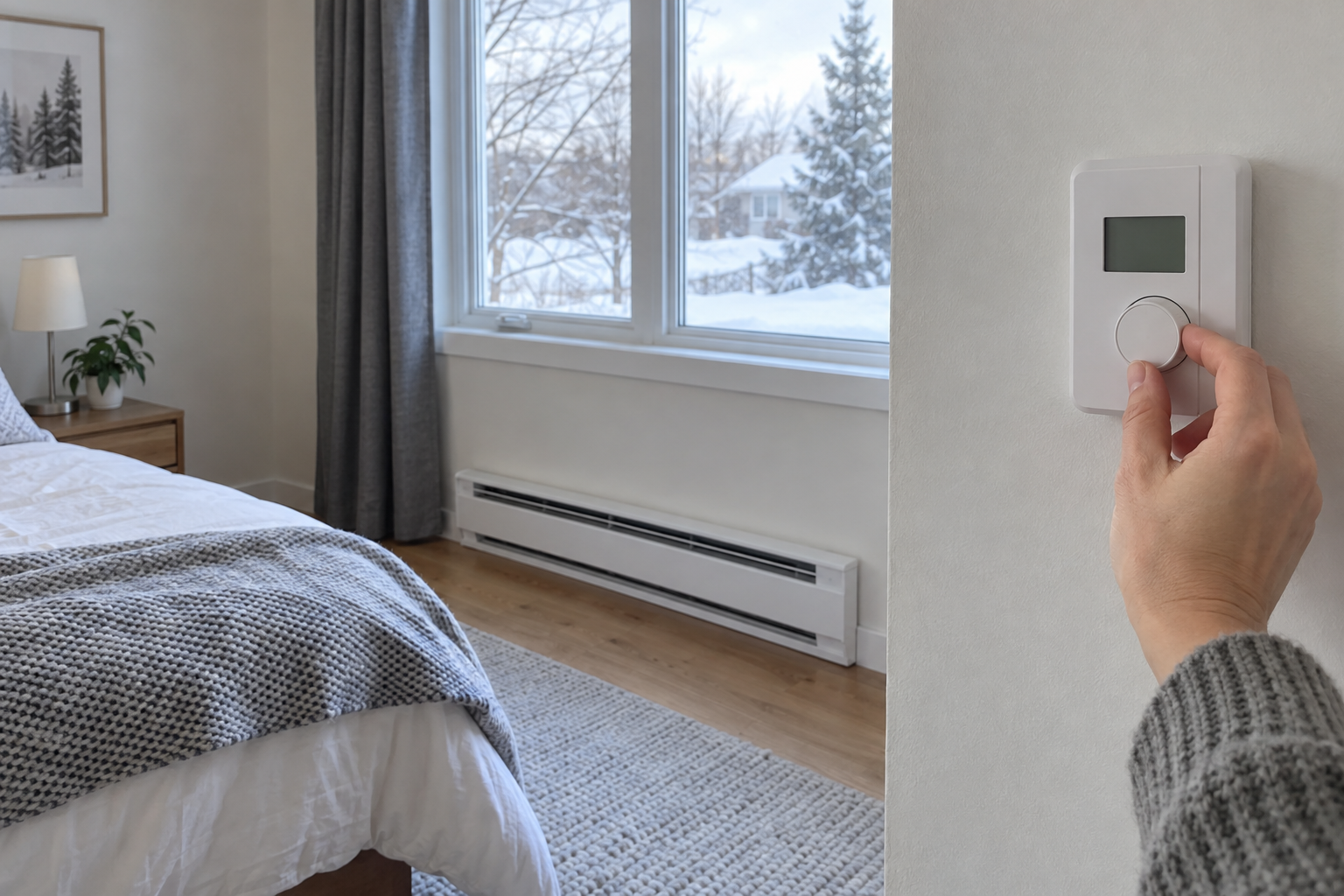
Baseboard heaters set lower than the heat pump only kick in when needed.
Baseboard heaters taking over
Electric baseboards set too high will turn on before the heat pump has finished its job. Even if your main heating system is not electric, electric auxiliary heating can have a significant impact on your winter bill.
Set your heat pump to a comfortable temperature, for example 21°C. Set your baseboards 2 to 3°C lower, for example 18 or 19°C, as recommended by Natural Resources Canada. They will then only activate during extreme cold. The same principle applies to electric elements placed in ducts.
During peak events, lower the thermostat on your baseboards, especially in unoccupied rooms.
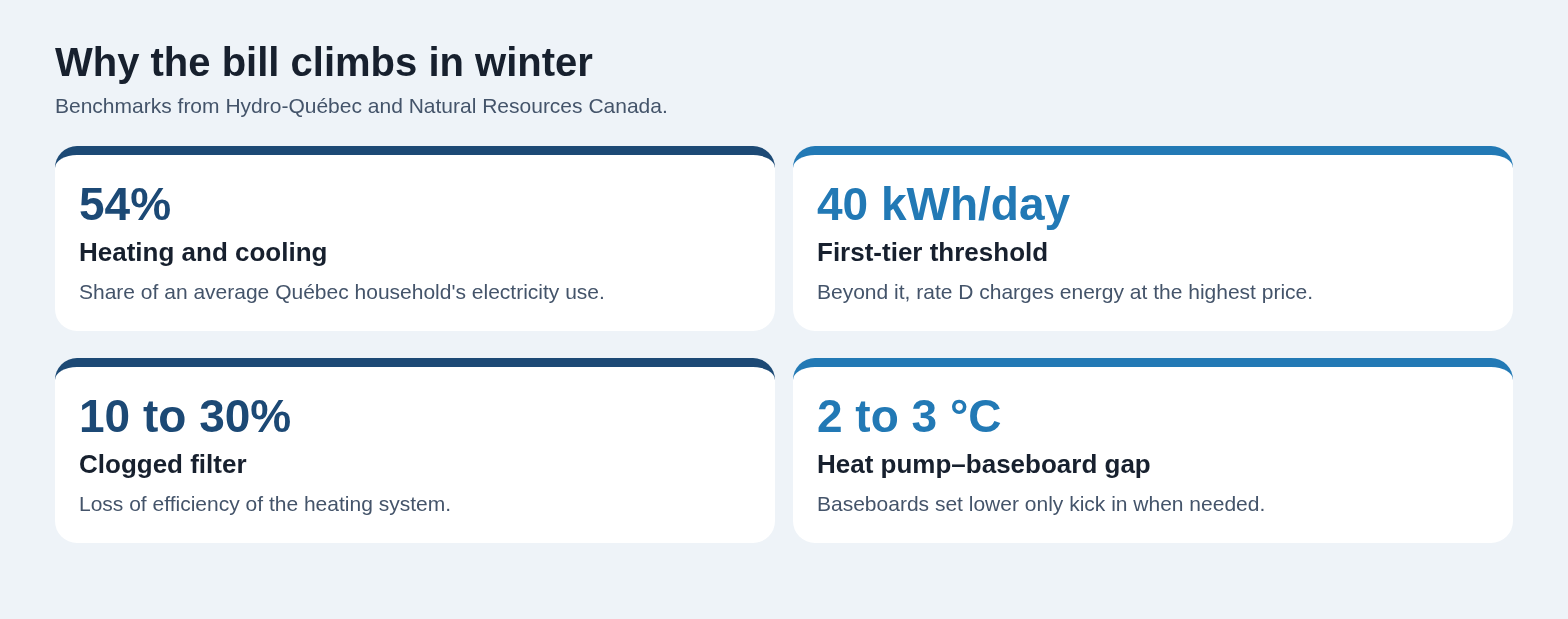
Four benchmarks for understanding your winter bill.
Settings that increase your consumption
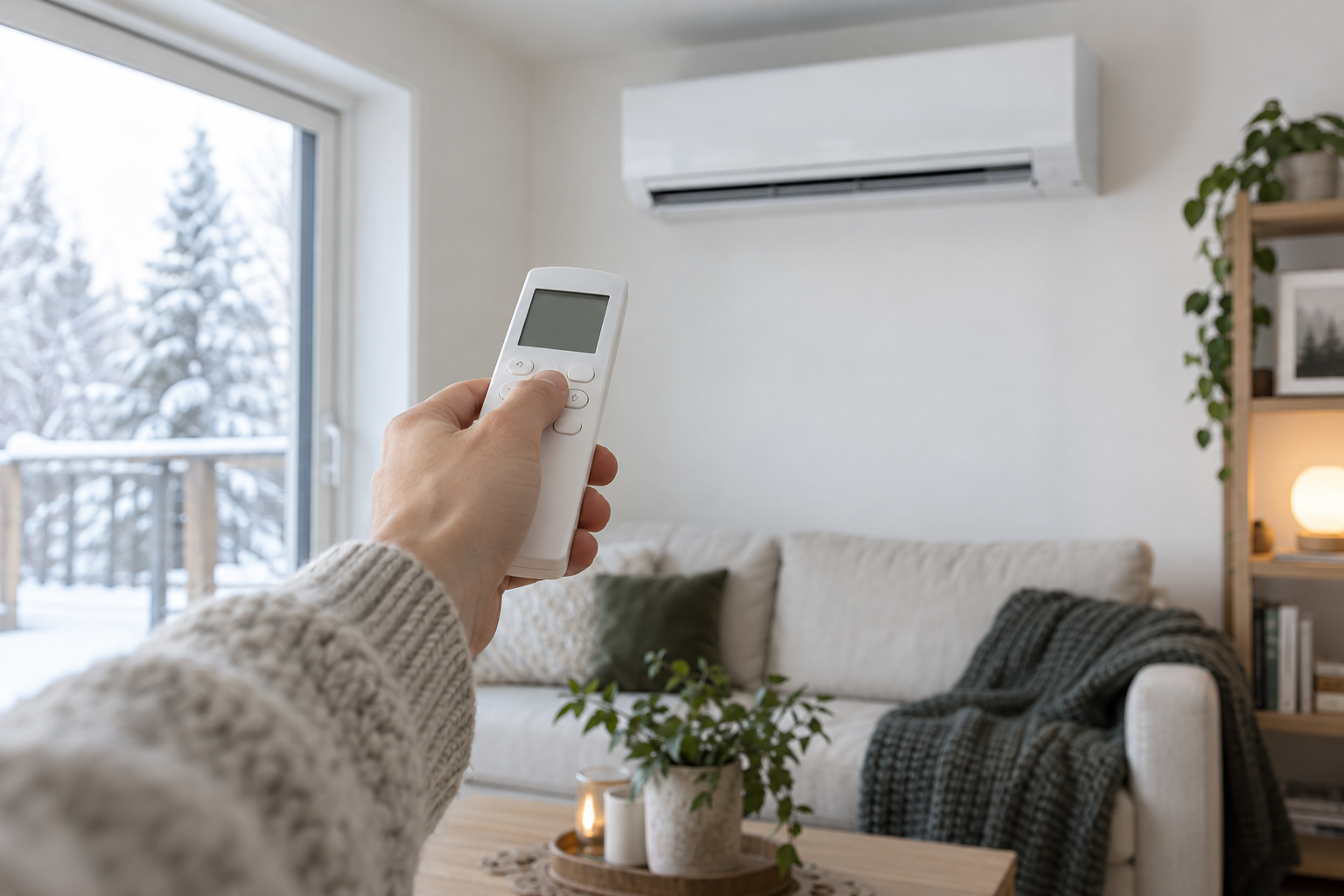
Automatic mode may trigger the air conditioning in winter. Choose heating mode, never Auto, as recommended by Hydro-Québec.
Frequent changes to the set point also increase consumption. Heat pumps operate more efficiently at a constant temperature : every adjustment puts more strain on the unit. Avoid turning it off and let it run continuously.
Lowering the temperature at night or when you are away can reduce heating costs, provided the change is moderate. NRCan suggests lowering it by no more than 2°C, or using a smart thermostat that restarts the heating in advance. A larger drop can prolong the time it takes for the heat pump to restore the temperature, which may cause the baseboard heaters to kick in.
In heating mode, set the fan to high speed or automatic mode. For a wall-mounted unit, direct the airflow downward. See also our guide on ideal home temperature in winter.
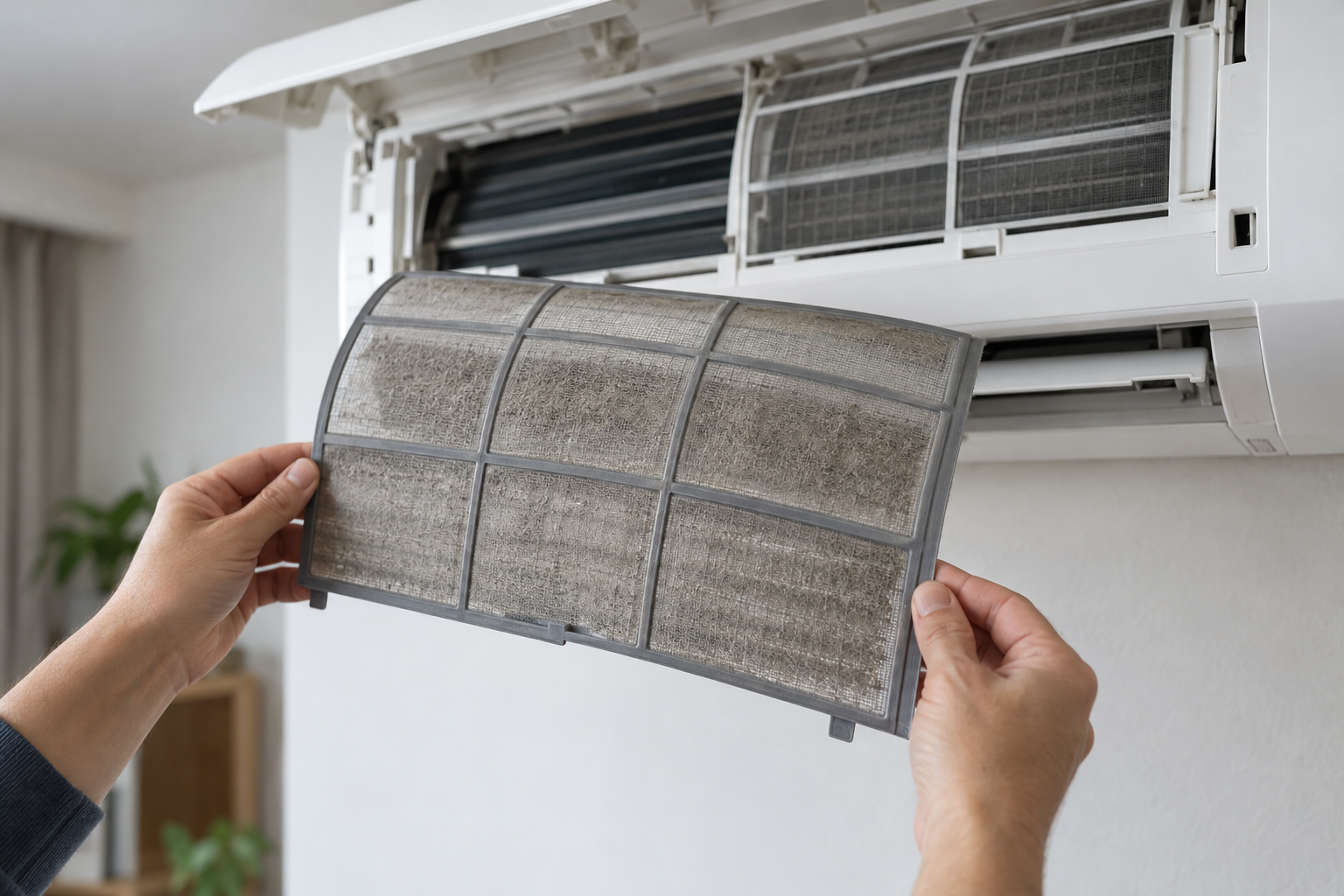
A clogged filter reduces heating efficiency.
Filters and maintenance
A clogged filter can reduce the efficiency of your heating system by 10% to 30%. It drives up your electricity bill and negatively impacts air quality.
NRCan recommends changing or cleaning the filter at least every 3 months. Hydro-Québec advises cleaning it every month during periods of heavy use. For a central system, do not block vents and registers with furniture or rugs, as insufficient airflow reduces efficiency.
A poorly maintained unit can consume up to 25% more electricity than one in good condition. NRCan recommends annual maintenance by a qualified contractor.
The house is losing heat
A heat pump struggles to compensate for heat loss caused by a poorly sealed building envelope. According to Hydro-Québec, poor insulation in walls, attics, and foundations can lead to losses of up to 40%.
Air leaks can account for 25% of a home's heat loss. Doors and windows can cause up to another 25%. If you notice drafts or cold rooms, address these issues first.
An improperly sized heat pump
An undersized heat pump puts more strain on auxiliary heating. An oversized heat pump produces too much heat in mild weather, causing it to cycle on and off frequently, which leads to discomfort, wear and tear, and increased reliance on auxiliary heating (NRCan).
NRCan recommends hiring a professional to perform a load calculation using a recognized method, such as the CSA-F280-12 standard. To learn more, read how to choose the right heat pump.
You must also account for extreme cold. ENERGY STAR certified cold-climate models offer the best performance down to approximately -20°C. Some high-end units operate down to about -25°C, albeit with reduced efficiency. In southern and central Quebec, there are on average fewer than 15 days per winter where the temperature drops below -20°C.
Table of causes, signs, and actions
When to have your system evaluated
If your bill remains high despite proper settings, clean filters, and a well-insulated and airtight building envelope, have your system evaluated. A technician will check the sizing, the condition of the unit, and the auxiliary heating settings. We serve areas including Terrebonne, Mascouche and Montreal.
If your unit is old, you may want to consider a replacement. Financial assistance of up to $5,400 is available with the units we install. Check out our wall-mounted and central heat pumps, and read if a wall-mounted heat pump is cost-effective.
Frequently asked questions about electricity bills with a heat pump

Guarantee: No traces, no stress — only lasting results.
5,000+
96%
$6,275